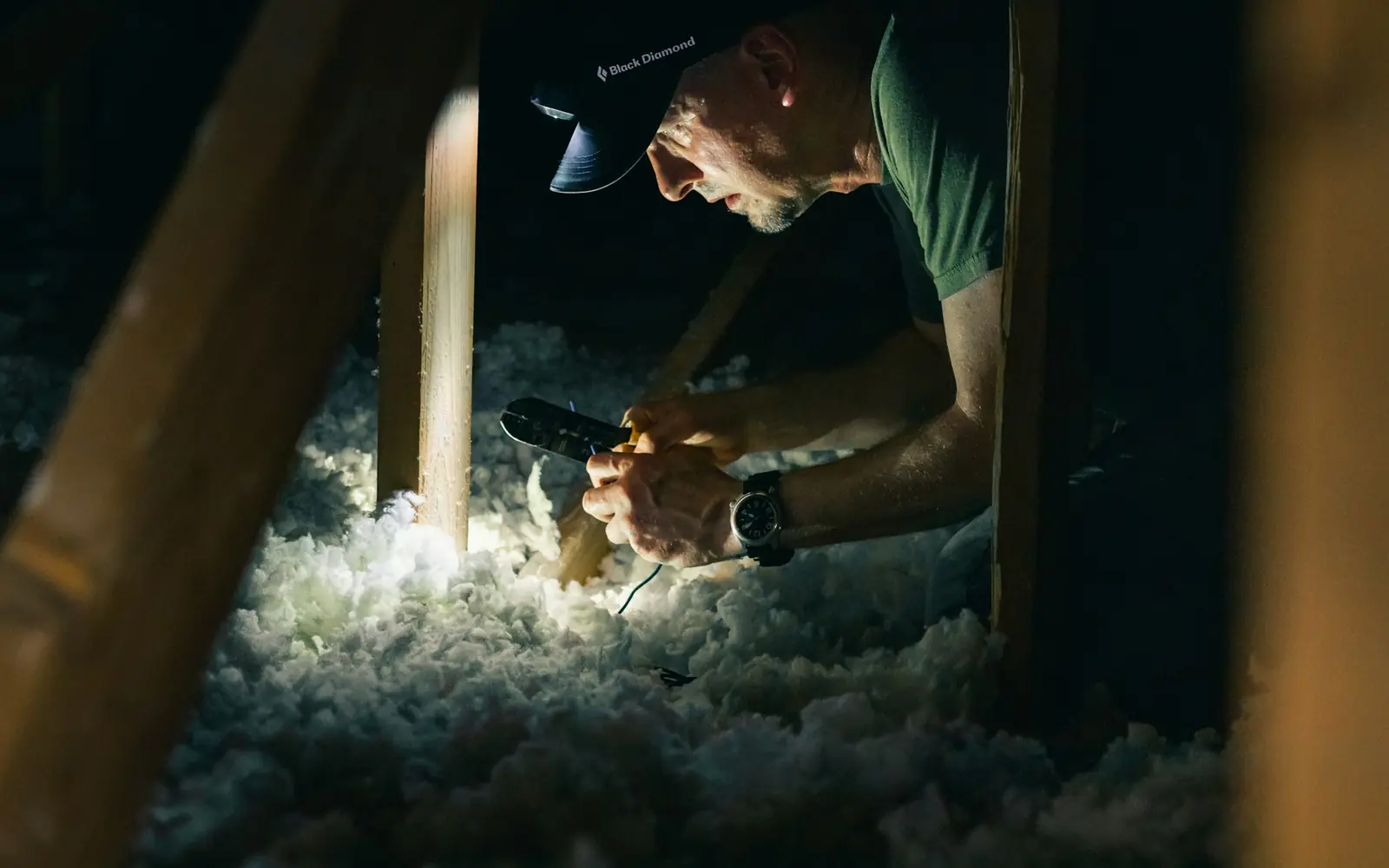
In a cold attic, a crew member lays insulation between joists while an auditor downstairs runs a blower door, a fan set in the front doorway that shows how much air leaks through the house. These jobs make homes easier to heat and cool and safer to live in. This explains the jobs, how the programs behind them work and the training that gets you started.
The usual way in: On-the-job training at a local agency
The jobs on a weatherization crew
Crew members seal gaps around windows, doors and pipes, add insulation to attics and walls, install weatherstripping and sometimes repair or replace furnaces and water heaters. Energy auditors inspect a home, run diagnostic tests and write the list of work the crew will do. Quality control inspectors check finished homes against program standards.
The work takes place in attics, crawlspaces and basements, often in heat, cold, dust and tight spaces. Crews wear respirators and protective gear, and the job involves ladders, lifting and travel between homes across a county or region.
How the programs work
Many of these jobs are tied to the Department of Energy’s Weatherization Assistance Program, which sends federal funds to states. States then fund local agencies, often community action agencies or nonprofit groups, that hire crews or contract the work out. Some utilities run their own home energy programs and hire auditors directly or through contractors.
Program funding and staffing can change from year to year, so the number of crews in an area may rise or fall. The local agency can tell you whether it is hiring and whether it uses its own crews or contractors.
Program funding and staffing can change from year to year, so the number of crews in an area may rise or fall.
Training and credentials
Many crew members start with no experience and learn on the job, often with classes at a state weatherization training center. Auditors and inspectors often hold a national home energy professional certification that requires experience and an exam, and many programs require it for those roles. Work in older homes may call for the Environmental Protection Agency’s lead-safe renovation certification.
A driver’s license and a background check are common, since crews work inside people’s homes. Your state’s weatherization program office can name the agencies in your area and the training each role needs.
What you can do this week
- Find the local agency that runs weatherization near you
- Ask whether it trains new crew members
- Ask about lead-safe renovation certification
- Check that your driver’s license is current
Worth remembering. Weatherization crews often learn on the job, while auditors and inspectors usually need a national certification.