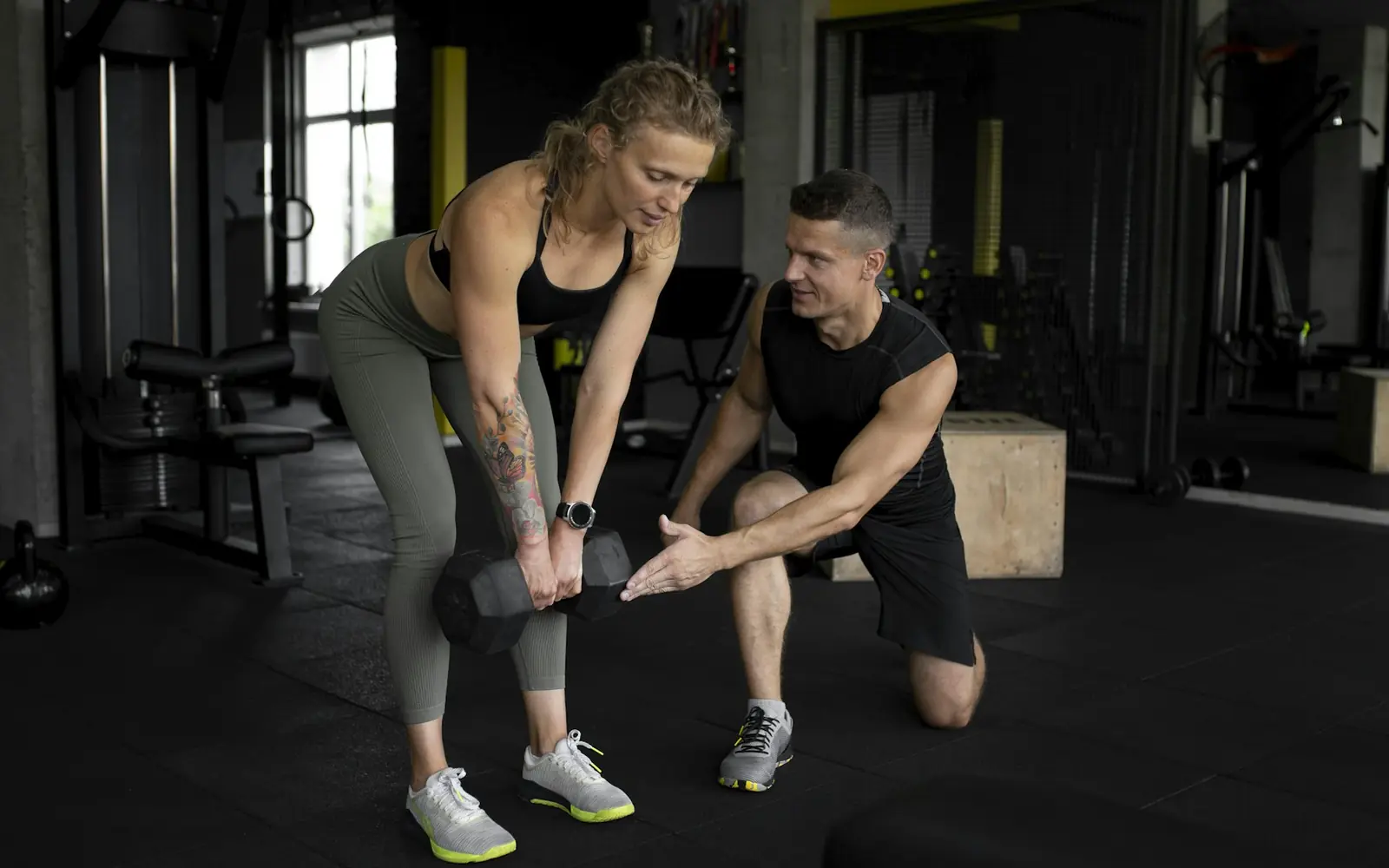
At 5:30 in the morning, the first trainer on the gym floor is already wiping down a bench and setting out dumbbells for a client who comes in before work. This guide covers the work, the certifications gyms read for and the way most trainers and instructors get started.
The usual way in: A certification plus CPR and AED
The work on the floor and in the studio
Personal trainers run one-on-one and small group sessions, plan workouts and track progress over weeks. Group fitness instructors lead classes such as cycling, strength or dance-based workouts to music. Both jobs cluster in early mornings, evenings and weekends, around clients’ own work hours.
In some gyms, selling training packages is part of the job, and floor shifts spent helping members count toward your hours. Other trainers work independently, renting space or training clients at home or outdoors.
Certifications employers ask for
States generally do not license personal trainers, so employers set their own requirements. Most ask for a certification from an organization whose exam is accredited by an independent body, plus current CPR and AED certification. Group instructors often add a certification for each class format they teach. Read job postings in your area to see which certifications local gyms name, since requirements differ from one employer to the next.
Some settings, such as hospital wellness programs or corporate gyms, prefer a degree in exercise science or a related field. Certifications are renewed every few years with continuing education, so keep records of each course you finish.
States generally do not license personal trainers, so employers set their own requirements.
Auditions and the first months
Hiring often includes a practical audition, such as walking a manager through a short session or teaching part of a sample class. New trainers usually start with floor shifts and member orientations while they build a client list.
Pay is usually per session or by the hour, and gyms may pay different rates for floor time and training time. Stay within the trainer’s role, and send clients with pain or injuries back to their doctor or physical therapist before you continue.
What you can do this week
- Sign up for a CPR and AED class
- Ask a local gym which certifications it accepts
- Compare accredited certification exams
- Plan a short sample session to lead
Worth remembering. Gyms set the rules for trainers, and most ask for an accredited certification plus current CPR and AED.