A nail technician’s morning often starts with the ventilation switched on and a tray of metal implements lifted out of a disinfecting solution. This guide covers the work at the table, the license your state asks for and how nail salons usually bring on new staff.
The usual way in: A short state-approved nail program
The work at the table
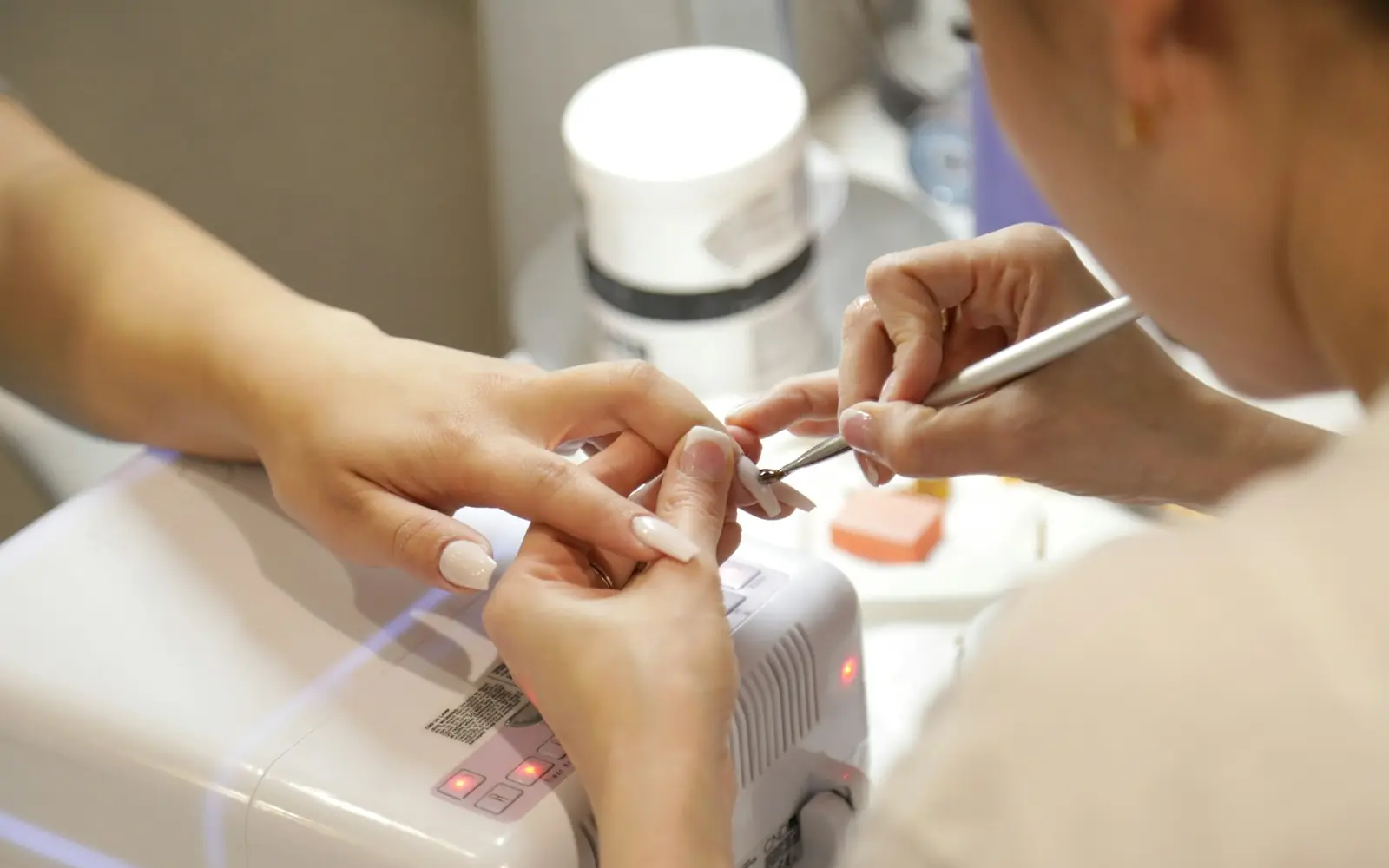
Nail technicians do manicures and pedicures, shape and polish nails, and apply gels, acrylics and nail art. The work is precise and done sitting down, with long stretches of fine hand movement. Fumes and dust are part of the job, so good salons rely on ventilation, gloves and masks.
Most nail technicians work in nail salons, full-service salons and spas. Evenings and weekends are often the busiest hours, and many technicians build a list of regulars who book with them by name. Pedicure stations add bending and reaching, so posture and short stretches between clients matter over a full shift.
Fumes and dust are part of the job, so good salons rely on ventilation, gloves and masks.
Training and the license
States license nail work through the cosmetology board, under a title such as nail technician, manicurist or nail specialist. Nail programs are much shorter than full cosmetology training, often a few hundred hours, though the number differs widely by state. A cosmetology license usually covers nail services too.
After the program, most boards give a written exam on sanitation, chemical safety, anatomy of the hand and foot, and state law, and many add a practical exam. Board inspectors check that implements are cleaned and stored the way the rules require. Licenses are renewed on the board’s schedule.
Getting hired and the first months
Salon owners often ask a new technician to do a demonstration service on a model before offering a chair. Some pay by the hour, some pay commission, some combine the two, and some rent tables to technicians who run their own small business.
The first months are usually about speed, consistency and a growing book of clients. Ask the owner who supplies products, how the schedule is set and how tips are paid out at the end of each day or pay period. If you plan to move later, ask the board in that state how it treats a nail license earned elsewhere, since transfer rules differ.
What you can do this week
- Read your board’s nail license requirements
- Visit two salons and ask how they hire
- Ask a school how long its nail program runs
- Practice a full manicure on a willing friend
Worth remembering. A nail license takes a shorter program than cosmetology, and the board in your state sets the hours and the exams.