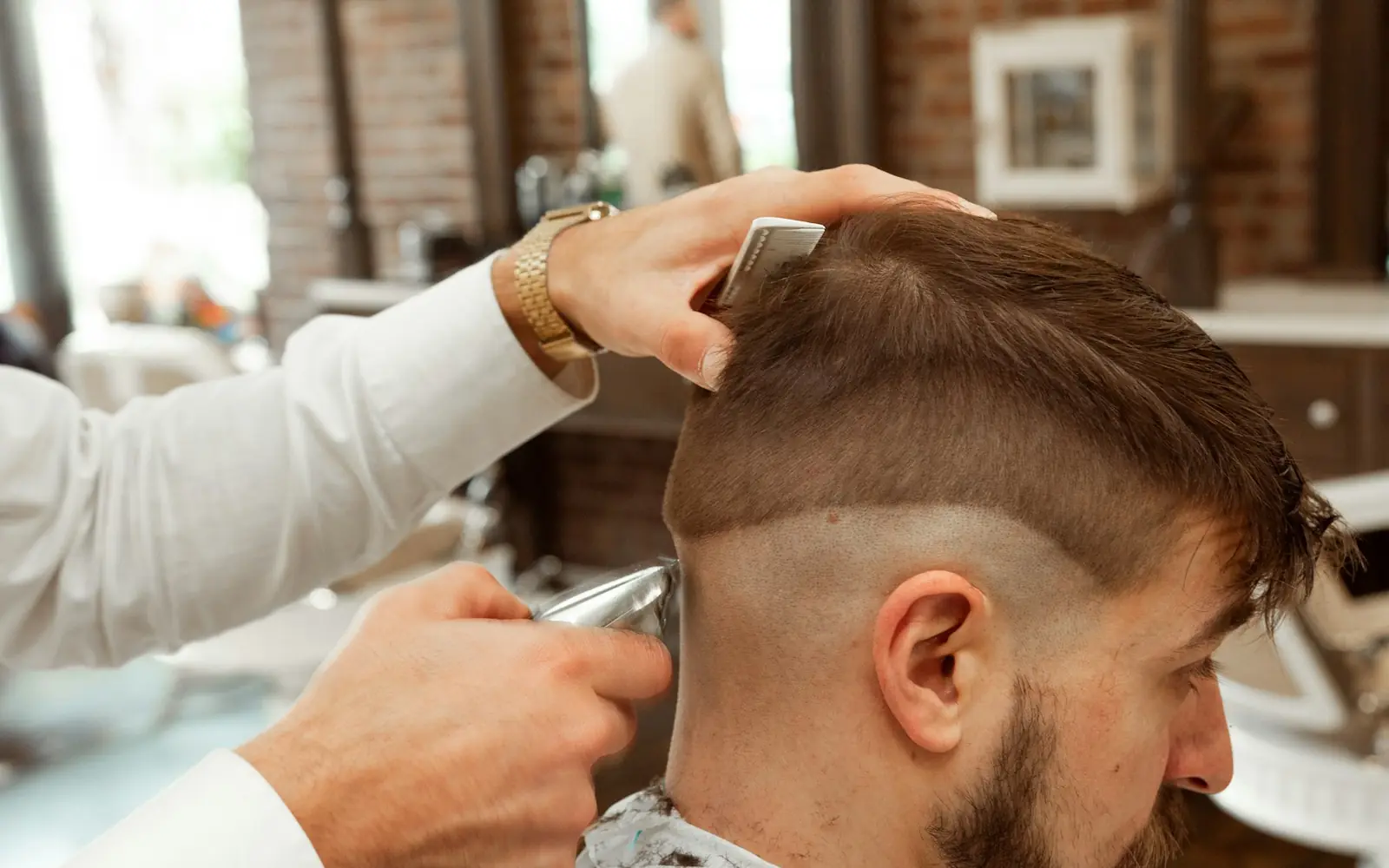
In a barber school clinic, a student lathers the back of a customer’s neck and holds a straight razor at a shallow angle while an instructor stands close enough to watch the blade. Barbering has its own license in most states, and this guide lays out the two usual ways to earn it and what the first months in a shop involve.
The usual way in: Barber school or a licensed apprenticeship
A license of its own
Many states run a separate barber board, while others license barbers and cosmetologists under one combined board with separate license types. Barber training puts more weight on clipper work, fades, beard shaping and shaving with a straight razor. The board decides which services a barber may offer and how many training hours come first.
Because the rules differ so much, start with your own state’s board. Its pages list the hours, the minimum age, the education level it expects and the exams it gives.
School or an apprenticeship
Barber school is the more common route, with theory classes and clinic hours on paying customers. Some states also let you train as an apprentice under a licensed barber in a licensed shop, usually over a longer stretch than school. You register with the board before the hours start counting, and your sponsor reports your progress.
Finding a sponsor is up to you, and many apprentices start by asking the owners of shops they already know. A few shops run apprenticeships registered with the state apprenticeship office or the Department of Labor, which adds a written training plan and pay that rises as you move through the stages.
Finding a sponsor is up to you, and many apprentices start by asking the owners of shops they already know.
Exams, a first license and the shop
Most boards give a written exam on theory, sanitation and state law, and many add a practical exam with a haircut and a shave on a model or mannequin. Some states first issue a beginning or apprentice-level barber license and grant the full license after a period of work under a licensed barber.
The shop itself holds a separate shop license and is open to board inspection. New barbers often spend their first months building a book of regular clients, walk-ins included, and learning how the shop pays, whether by commission, hourly pay or chair rental.
What you can do this week
- Read your barber board’s training hour rules
- Ask a local shop owner how they trained
- Compare barber school schedules near you
- Check whether your state issues a beginning barber license
Worth remembering. A barber license comes through school or, in some states, an apprenticeship in a licensed shop, and the board sets both routes.