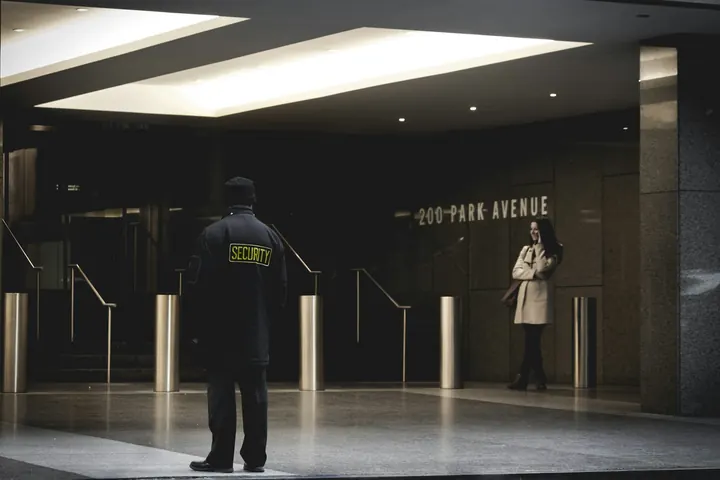
A security officer’s first post might be a lobby desk in an office building, a gate at a distribution center or a patrol car circling an apartment complex at night. In many states the officer needs a state license, often called a guard card, before standing that post. Checking your own state’s rules first lets you line up the training and fingerprints in the right order.
The usual way in: A state guard license and training hours
Who licenses security officers
Most states license private security officers through a state agency, such as a department of public safety, a consumer affairs department or a private security board. A few states leave it to cities or counties, and some have no license for unarmed officers. The licensing agency publishes its rules and forms.
In many states the security company must hold its own business license and register each officer it employs, so the application often goes in with help from the employer. Some states let you apply before you have a job, while others need an employer to sponsor the application.
Training hours and checks
States that license officers usually require a set number of training hours, sometimes before the first shift and sometimes within weeks or months after. Common topics include the limits of a security officer’s authority, observation and report writing, emergency response and communication. A fingerprint-based criminal history check through the state and the FBI is standard.
Most states set a minimum age, often 18 for unarmed work, and certain convictions can bar a license. The licensing agency decides each application, and some states issue a temporary permit while the fingerprint check is pending.
The licensing agency decides each application, and some states issue a temporary permit while the fingerprint check is pending.
Armed posts and renewal
Armed security work requires a separate license or endorsement in most states, with firearms training, range qualification on the weapon you will carry, a higher minimum age in many states and sometimes a psychological screening. Armed officers usually requalify on the range on a set schedule.
Licenses expire and must be renewed, often every one to three years, and some states require refresher training to renew. Moving to another state generally means applying again there, since many states do not recognize another state’s security license.
What you can do this week
- Look up your state’s security licensing agency
- Read how many training hours it requires and when
- Ask an employer whether it sponsors applications
- Schedule fingerprints once the application is ready
Worth remembering. Security licensing is set state by state, so the training hours, checks and armed rules depend on where you work.