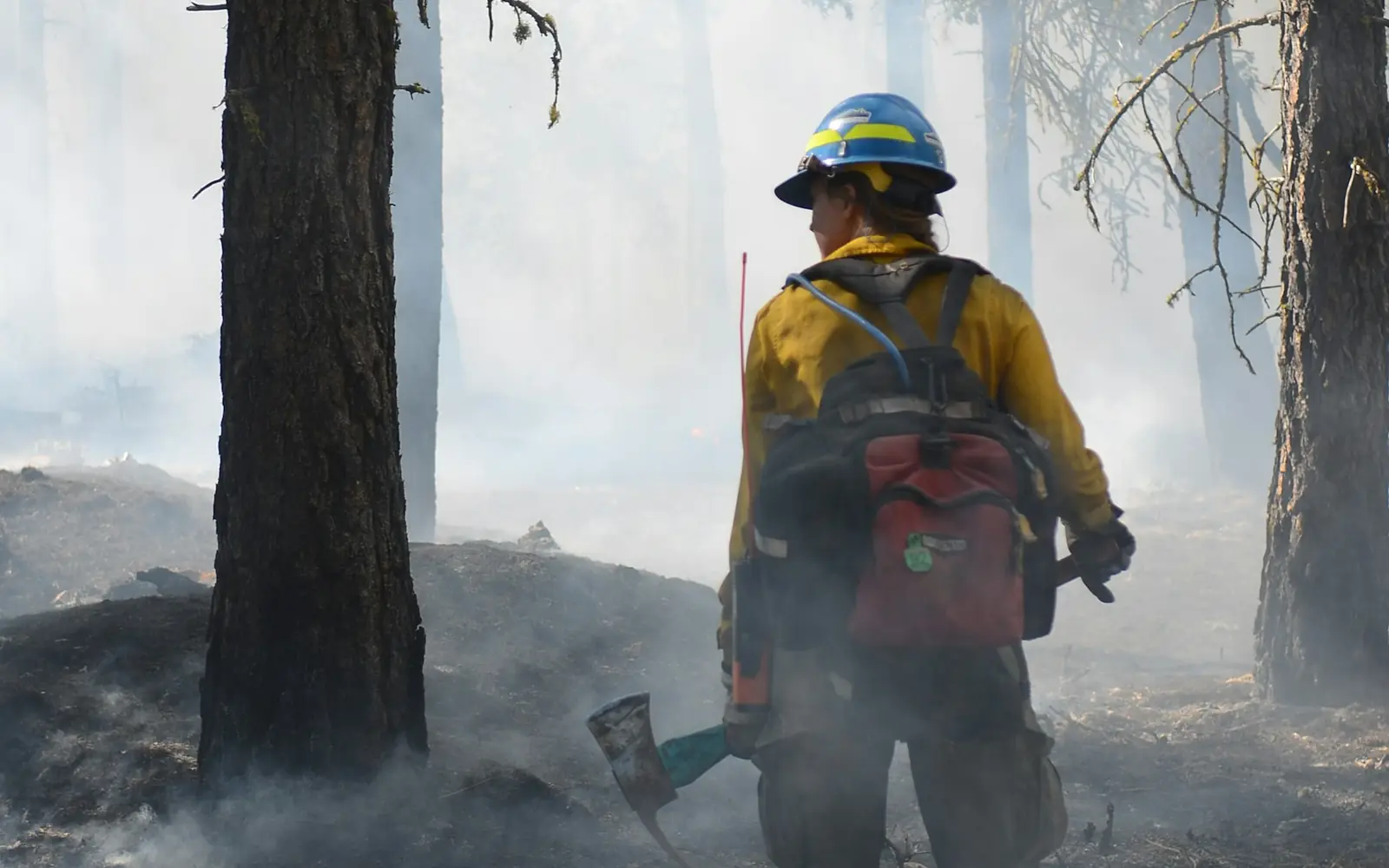
On a hot afternoon, a hand crew lines up single file below a ridge, each person carrying a tool and a pack, and starts cutting a strip down to bare soil. Most of these crews are hired months before the fire season, and this guide explains who hires, when to apply and what the first season looks like.
The usual way in: A seasonal federal or state fire job
Who hires and when
Federal land agencies, including the Forest Service, the Bureau of Land Management and the National Park Service, hire seasonal wildland firefighters, and so do state forestry and fire agencies. Federal openings usually appear on USAJOBS in the fall and winter for the following season. Federal wildland fire programs have been reorganized in recent years, so read each announcement for the agency doing the hiring.
Crews come in several types: hand crews, engine crews, helicopter crews and hotshot crews that travel nationally. Private contract crews also work fires under agreements with agencies. Applying to several locations and crew types at once is common.
Federal openings usually appear on USAJOBS in the fall and winter for the following season.
The pack test and basic training
Most crews require the work capacity test, often called the pack test. At the arduous level used for firefighters, you walk 3 miles on flat ground carrying a 45-pound pack within 45 minutes. A medical review usually comes first, and you can train for the walk for weeks ahead of time.
New firefighters take basic courses on fireline safety, fire behavior and the use of a fire shelter, usually in about a week of classroom and field work. Passing them and the pack test earns you an incident qualification card, which crews call a red card.
The fire season itself
Shifts on a fire can run 16 hours, and assignments away from home often last two weeks or more. Crews sleep in fire camps or on the line, and the work is steep, hot and smoky. Between fires, crews do fitness training, equipment work and fuels reduction projects.
Seasonal appointments end when the season does, and many firefighters return year after year. Over time, some move into permanent or year-round positions, and veterans’ preference applies to federal fire jobs. Ask the station about housing before you accept an offer.
What you can do this week
- Create a USAJOBS profile and saved search
- Start training with a weighted pack
- Call a local fire station about crew types
- Check your state forestry agency’s seasonal postings
Worth remembering. Wildland fire crews hire months before the season, so the applications and pack test training start in the fall and winter.