By seven in the morning, a landscape crew has the trailer hitched, the mowers strapped down and the day’s route clipped to the truck’s visor. This guide covers what the work involves through the year, how crews hire and which tasks call for a state license.
The usual way in: On-the-job training with a crew
What crews do through the year
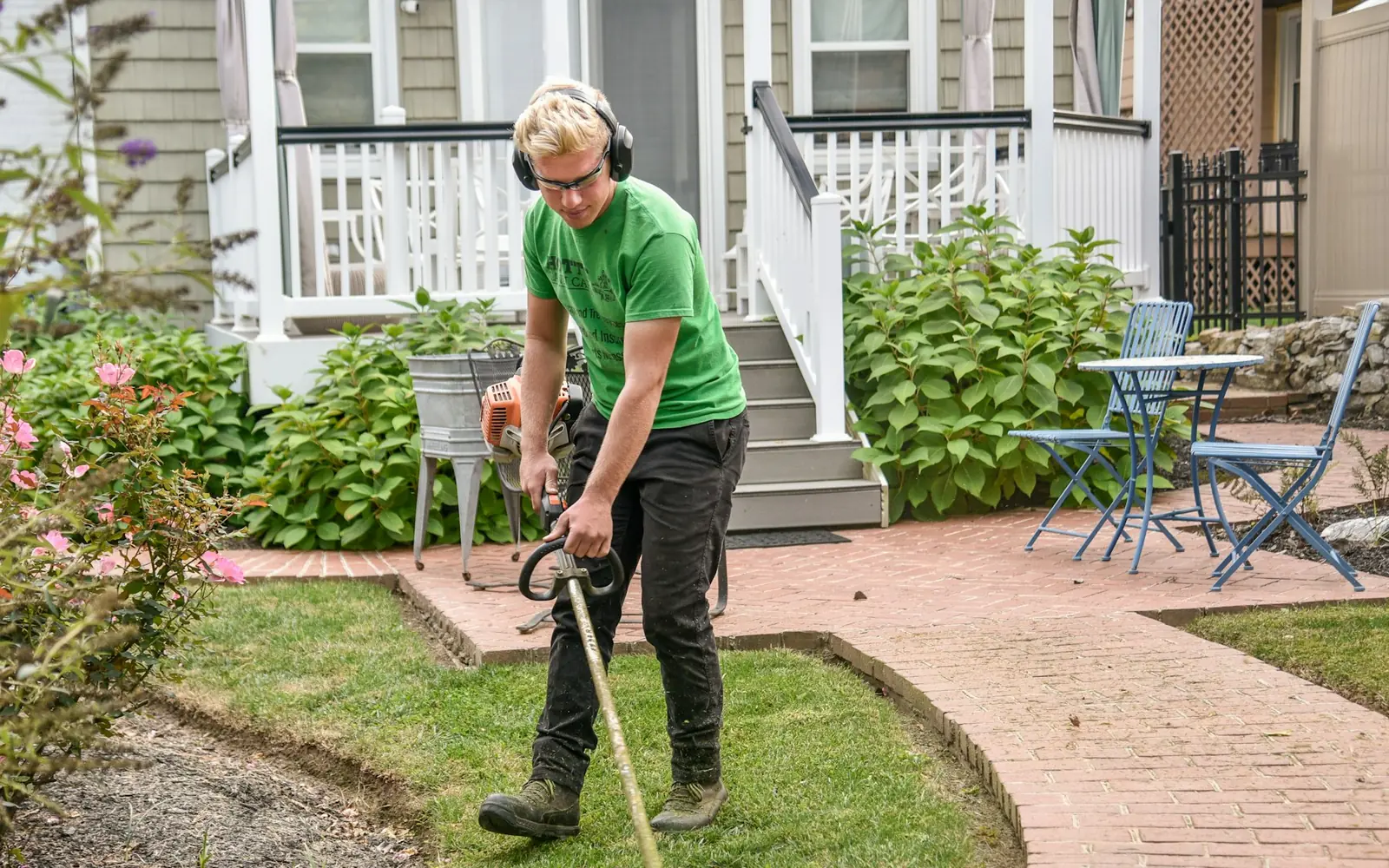
Landscape crews mow, edge, plant, mulch, prune and repair irrigation, and some build patios and walls. Groundskeepers do similar work at parks, schools, college campuses, cemeteries, sports fields and apartment complexes. The work is outdoors in heat, cold and rain, with loud equipment, so hearing and eye protection are part of the uniform.
In colder states, the season slows in late fall, and some companies shift crews to leaf cleanup and snow removal through the winter. Ask any employer what happens to your hours between seasons.
Ask any employer what happens to your hours between seasons.
How people get in
Most crew members learn on the job, starting with mowing, trimming and loading. A valid driver’s license is often asked for, and some employers want a commercial driver’s license for larger trucks and trailers. A drug test may be part of hiring where trucks and heavy equipment are involved.
Spraying pesticides or weed killers for hire generally needs a state applicator license from the state department of agriculture. Industry groups offer certifications in irrigation, tree care and landscape work that some employers like to see. Cities, counties and school districts hire groundskeepers through their human resources offices, sometimes with a civil service test.
The first months and moving up
A new crew member usually spends the first weeks learning the equipment and the routes under an experienced lead. Expect a safety talk on mowers, trimmers and blowers before you run any of them on your own. People who show up reliably and learn the plants and machines often move to crew lead or foreman over a few seasons.
Some go on to run their own company. Several states license landscape contractors or require a contractor registration for larger jobs, so check with your state before you bid on work of your own.
What you can do this week
- Request a copy of your driving record
- Ask a local parks department when it hires seasonal crews
- Read your state’s pesticide applicator rules
- Buy sturdy work boots that fit well
Worth remembering. Most landscaping jobs train you on the crew, while spraying chemicals for hire needs a state license.